youtharc ·
What if we treated our young people as assets instead of problems?
YouthARC is a vital Hobart hub where young people find belonging through arts and music. By investing in connection before crisis, we build a city that values its residents as assets.
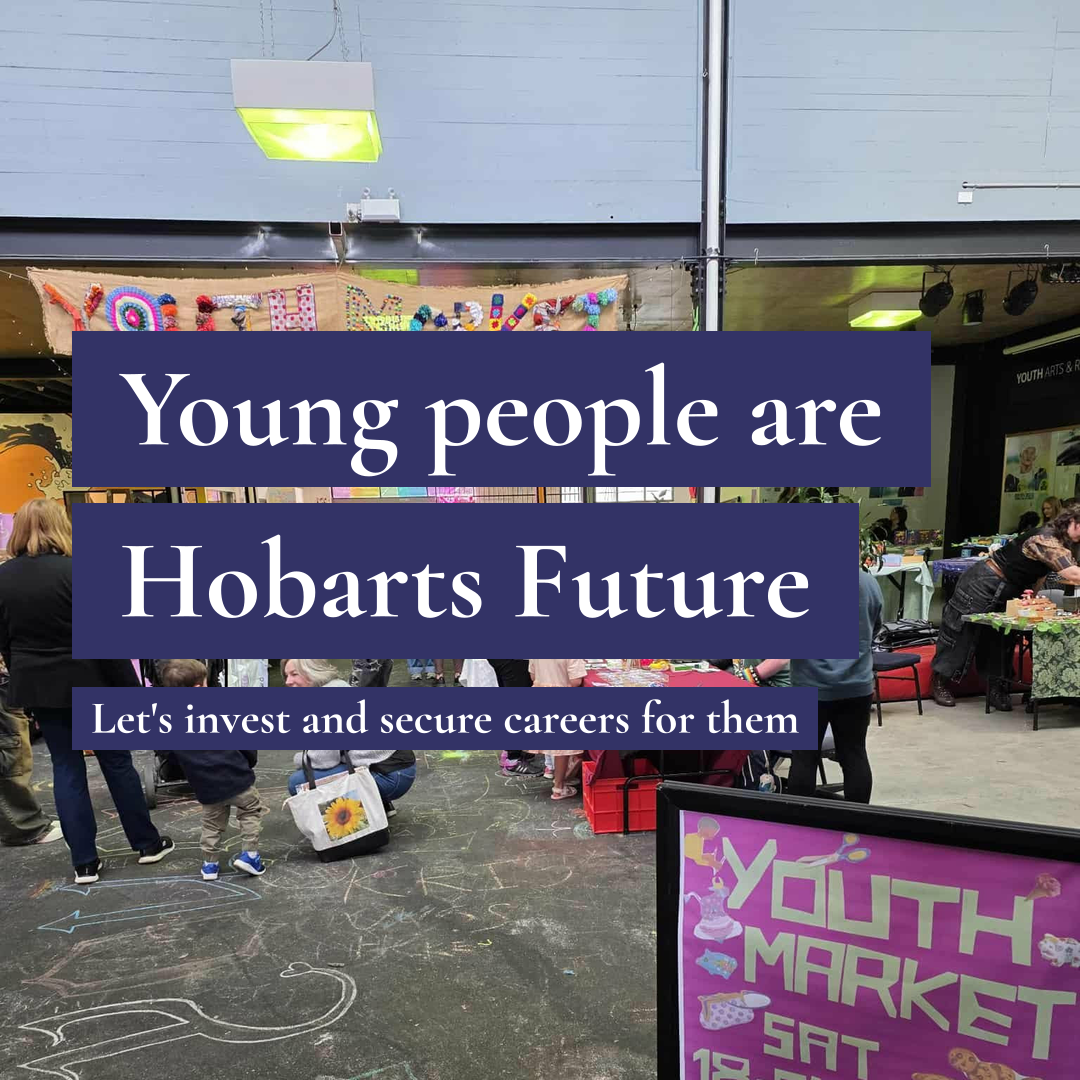
The best thing Hobart does for its young people barely makes the news
Most conversations about youth services start at the point of crisis. YouthARC starts somewhere smarter — before things go wrong.
There is a building in Hobart where, every afternoon from Tuesday to Friday, something quietly remarkable happens. Young people arrive - not because they are ‘in crisis’, referred by a social worker, or because they have ‘nowhere else to go’. They arrive because they want to be there. We should pay attention.
The Youth Arts and Recreation Centre - YouthARC - is a Hobart City Council facility within our city’s social architecture. It is neither a crisis service or an intervention program. It is, in the most straightforward sense, a place where young people can belong.
Belonging matters more than we often admit.
Between 3pm and 6pm, in the gap between school and home that so often becomes the gap between okay and not okay, YouthARC offers arts workshops, music opportunities, cooking, creative activities and - perhaps most importantly - a place to meet each other. More than 3,300 young people came through its doors last year on their own volition. Of all the places they could hang out after school, this is the place they chose.
Our Government tend to fund youth services and support reactively. We wait for the breakdown, truancy, or mental illness, and then we mobilise. That approach is absolutely necessary but it’s also insufficient and expensive - financially and humanly.
We should not measure care only by how we respond to collapse.
YouthARC operates on different logic: that connection is cheaper than crisis, and that a young person who feels seen and valued is significantly less likely to need intensive support down the track. Consider a message sent by a former participant years after leaving: “You were the first person I met that saw me as a person, all of who I am. I truly wouldn’t be where I am without the experience I had at YouthARC.” They now work in healthcare, helping others – a fantastic outcome.
What makes YouthARC effective is also what makes it hard to explain. It’s best identified as a community commitment, treating young people as the assets they are rather than problems society attempts to label them as. Programming at YouthARC is shaped by the young people themselves, which means they arrive with ownership and motivation to engage rather than obligation to merely participate. YouthARC reaches into schools, supports migrant youth, students with disabilities, drawing participants from across Greater Hobart. YouthARC acts as a connector to both creative industries and education pathways - Organisations that young people might never otherwise encounter.
Last September’s PLUG-IN music industry conference brought 106 young people from schools across Hobart into a room with working musicians, producers, radio presenters and label managers. Participants felt they benefited so much they requested it become an annual event. Some left with recording time booked at MONA’s Frying Pan studios. Others secured gig bookings or work experience. A music industry day that costs relatively little to run opened doors that would otherwise have stayed closed.
Hobart City Council’s budget for YouthARC is modest. What it provides is a hub that allows schools, community organisations, creative industries and support services to engage with young people in one place. It is both an efficient model and a generous one. As an Alderman, I’d argue it is also one worth protecting and building on. A city that chooses to invest in belonging before breakdown is a city building something more durable than any single program. It is building the kind of community that young people choose to stay in, contribute to, and eventually lead. We should be proud of that.