public transport ·
Leading a Regional Plan for Safer, Smarter Bus Stops
With bus patronage rising, our stops need more than just a pole. Louise Bloomfield proposes a regional audit and upgrade program to deliver seating, shelter, and local art for Greater Hobart.
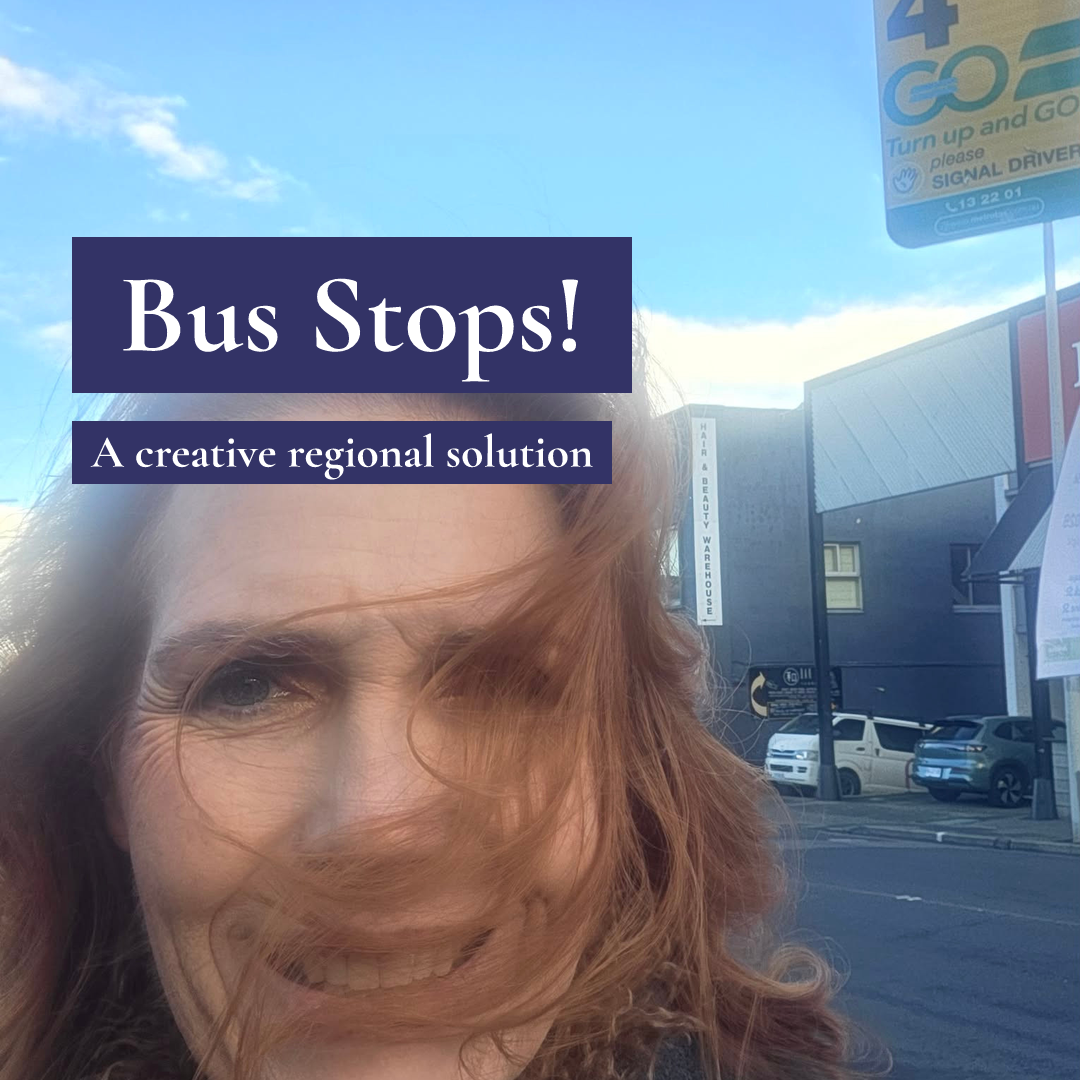
Creative and functional bus stops could be a fantastic and much needed addition to our city!
Tasmanians have embraced free public transport.
With bus patronage increasing by around 30 per cent, it is clear that removing fares has encouraged more people to leave their cars at home and step onto a bus.
That is good news for household budgets, congestion and the environment. But it also raises a practical question: are our bus stops ready for the additional passengers we are encouraging to use them?
Too many bus stops around Greater Hobart consist of little more than a pole and a timetable. There is often nowhere to sit and nowhere to escape the rain, wind or summer sun.
We cannot promote public transport while leaving passengers standing beside the road in Tasmanian weather. Even the hardiest Hobartian will eventually admit defeat when the rain starts travelling sideways.
For an older person, someone living with disability, a parent with young children or a worker carrying groceries home, a seat is not a luxury. A shelter is not an optional extra. These are basic pieces of accessible public infrastructure.
I believe Hobart should lead a regional project to improve bus stops across Greater Hobart.
The first step should be a coordinated audit involving Hobart and our neighbouring councils, the State Government, Metro and other transport providers. It should identify the stops with the greatest passenger use, the longest waiting times and the most urgent accessibility and safety needs.
From there, we could develop a staged program to provide seating, shelters, lighting, accessible boarding areas and clearer passenger information at priority locations.
However, councils could not and should not be expected to fund the entire program through council rates.
A project of this scale would require the Lord Mayor and participating councils to sit down with the State and Federal governments and negotiate for infrastructure, transport, accessibility and regional development funding.
That is an important part of the Lord Mayor’s role.
It is not enough to identify problems or issue public statements about them. The Lord Mayor must build relationships, bring different levels of government to the same table and present strong, practical projects that are ready to receive investment.
This is something I am confident in doing.
Throughout my professional and council life, I have worked constructively with government, businesses and community organisations to find workable solutions. I understand the importance of presenting a sound business case, demonstrating regional benefit and making certain that every dollar requested delivers lasting public value.
Hobart should lead the development of the proposal, build the regional partnership and then advocate strongly for the grants needed to deliver it.
But the project could achieve far more than practical infrastructure alone.
Each shelter could also become a small piece of public art.
Local artists, designers and young creative people could be commissioned to develop artwork reflecting the history, landscape and character of individual neighbourhoods. Designs could celebrate local stories, native plants, historic buildings, community figures or the view of kunanyi that binds Greater Hobart together.
Instead of purchasing identical shelters from somewhere else, we could involve Tasmanian artists, manufacturers and tradespeople. This would support the creative economy, provide paid opportunities for emerging artists and direct more project spending into local businesses.
A coordinated regional design and procurement process could reduce engineering and administrative costs while still allowing each suburb and council area to retain its own identity.
The project would not need to happen everywhere at once. A sensible pilot could begin with several busy or poorly serviced stops in each participating council area. The results could then be assessed before the program was expanded.
Hobart is Tasmania’s capital city. That means our leadership should extend beyond our municipal boundary.
We should be bringing councils, governments, communities and businesses together around practical regional projects that improve people’s daily lives.
Free public transport has encouraged thousands more Tasmanians to step aboard. We must now ensure that the beginning and end of their journey are safe, accessible and welcoming.
A good city is often built through modest things done well: a clean street, a safe crossing, a comfortable seat and shelter from the rain.
With sound planning, successful grant negotiations and a little imagination, the humble bus stop could also become a canvas for the story of our region.